
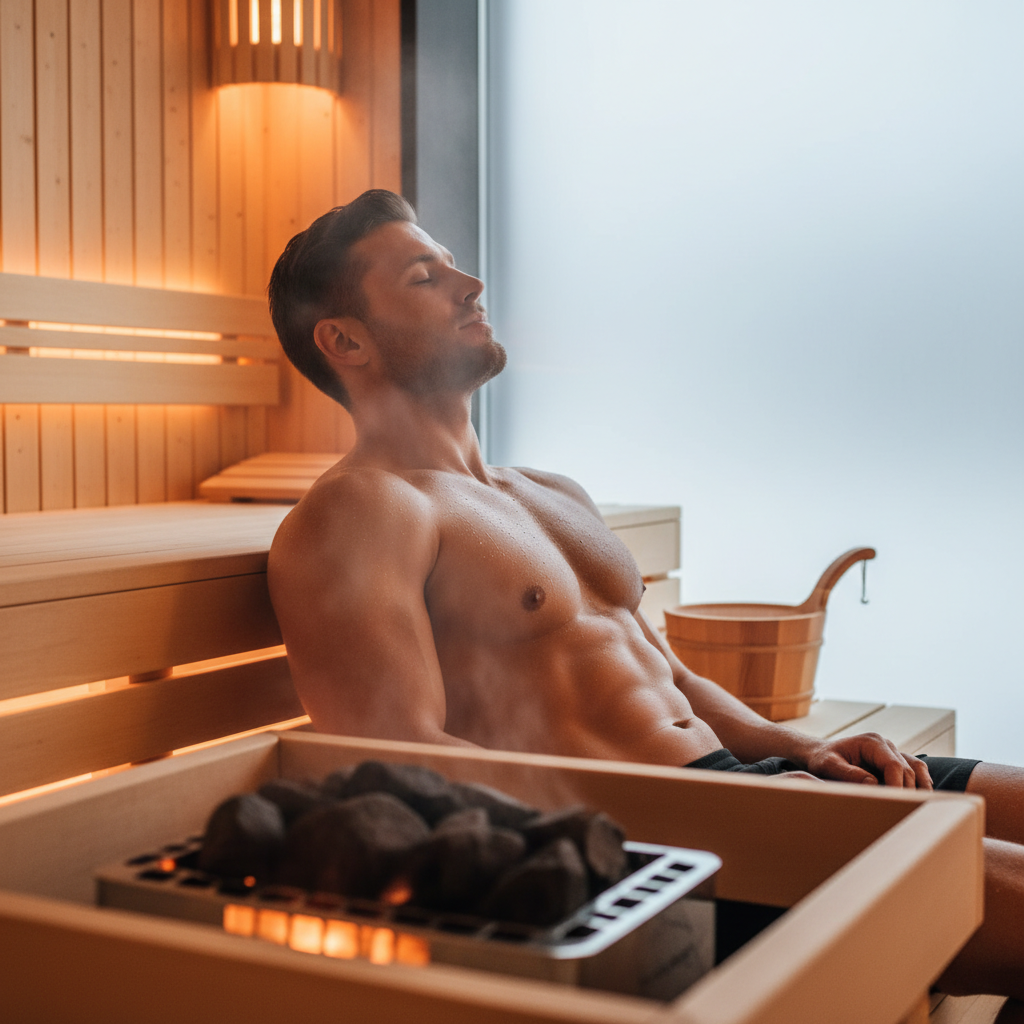
Modern sports demand not only maximum physical performance during training, but also an optimal recovery strategy. Elite recovery is just as important as the exercise itself. Among the many regeneration methods, sauna after sports remains a time-tested, and now scientifically proven, tool that allows you to achieve faster and more effective muscle recovery in the sauna.
This comprehensive guide explores exactly how heat therapy works at the cellular level, explaining why sauna after sports is one of the most powerful regeneration techniques, ensuring not only reducing muscle pain in the sauna, but also increasing overall endurance. This is science-based recovery, adapted for top-class athletes.
Scientific basis: The effect of sauna on muscles and cell regeneration
The benefits of a sauna after sports are not just a subjective feeling of relaxation. The high temperature causes profound physiological changes that actively contribute to the recovery process.
Stimulation of blood circulation and elimination of metabolites
The heat of the sauna causes intense vasodilation - the widening of blood vessels. Increased blood flow to the muscles means a greater supply of oxygen and nutrients, which are necessary for the repair of damaged myofibrils. In addition, the increased blood flow helps to remove metabolic byproducts, including lactic acid and other fatigue-causing compounds, more quickly, thus improving regeneration after training.
Heat shock proteins (HSPs) and cellular resistance
One of the essential effects of sauna on muscles One of the mechanisms is the stimulation of the production of Heat Shock Proteins (HSPs). These proteins act as cellular „sanitaries“ – they help repair damaged protein structures, protect against oxidative stress and optimize cellular function. Studies show that higher HSP concentrations are associated with faster muscle recovery and greater cellular resistance to future physical exertion. This directly leads to, how to recover faster after sports.

Sauna after sports: benefits for athletes: From strength to endurance
Benefits of sauna for athletes covers a wide spectrum, regardless of the discipline - whether it's strength sports or long-distance running.
DOMS reduction and muscle fiber relaxation
Delayed onset muscle soreness (DOMS) is inevitable after intense workouts. Heat therapy for muscles helps relax tense muscle fibers, reduces inflammation and irritation of nerve endings, thereby significantly reducing discomfort. Heat acts as a natural analgesic, facilitating the restoration of range of motion.
Sauna and recovery after running: Increasing endurance potential
Long-distance runners especially appreciate sauna and recovery after running. Regular sauna use can improve plasma volume and blood flow to the heart, which is critical for endurance. This cardiovascular conditioning achieved in a sauna mimics light exercise but without the mechanical stress on muscles and joints, thus increasing the body's ability to deliver oxygen more efficiently.
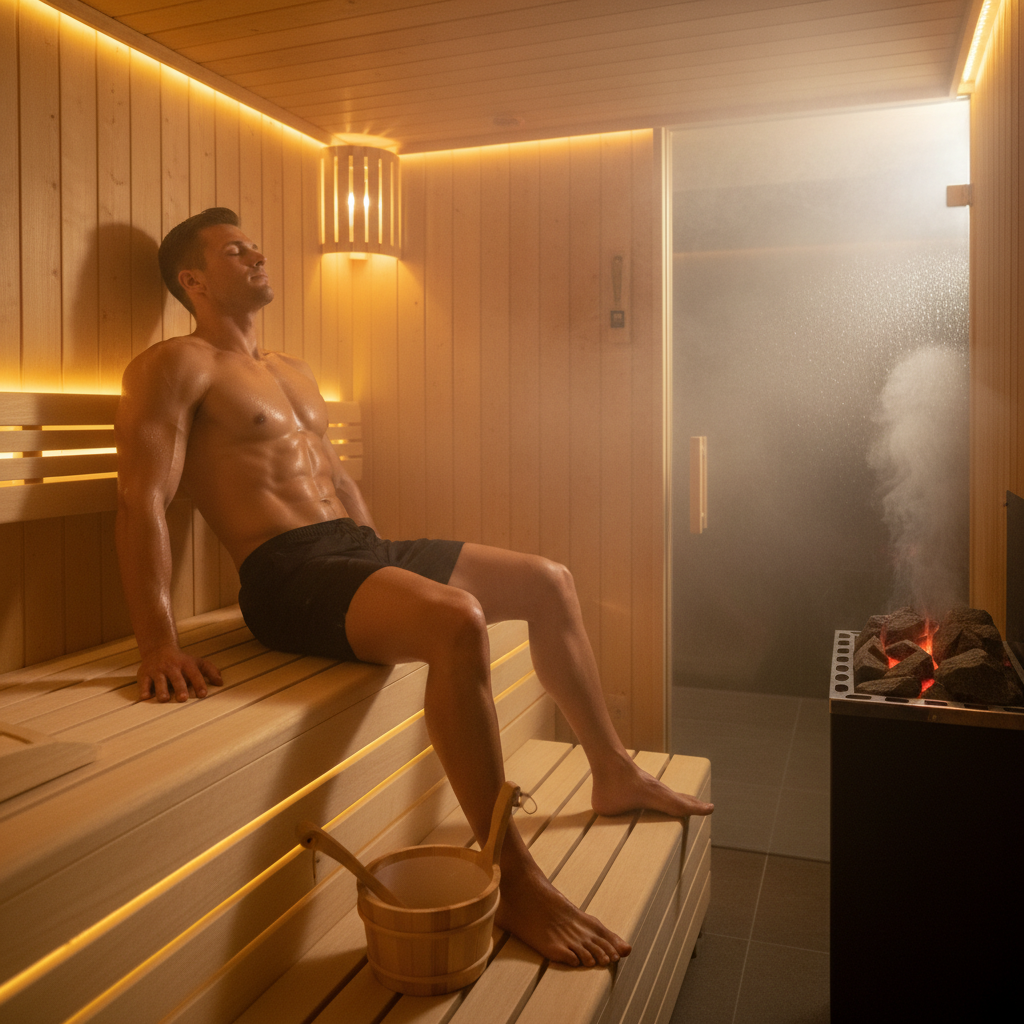
Optimal Recovery Protocol: How to Achieve Maximum Effect
In order to muscle recovery in the sauna To be as effective as possible, it is important to follow protocols based on knowledge of regeneration science.
- Post-workout time: Don't rush. It's recommended to wait at least 10-30 minutes after finishing your workout to allow your heart rate to return to normal and your body to cool down a bit. Otherwise, you could overwork your cardiovascular system.
- Temperature and duration: The optimal temperature is around 70°C – 90°C. 10–20 minutes is enough for recovery. Staying longer can cause dehydration, which will impair regeneration.
- Hydration: It is essential to drink plenty of water or electrolyte-rich drinks before, during, and after a sauna session. Dehydration is the biggest enemy of regeneration.
- Contrast (Cold and Warm): To maximize the effects of vasodilation and vasoconstriction, it is recommended to briefly immerse yourself in cold water or take a cold shower after a heat session. This improves lymph flow and contributes to faster recovery.
Sauna is more than a pleasant ritual – it is a powerful, scientifically based tool that allows athletes to not only recover faster, but also increase their physical performance in the long term. By integrating heat therapy for muscles into a regular recovery plan, creating an optimal foundation for continuous improvement and injury prevention.

FAQ (Frequently Asked Questions)
When is the best time to go to the sauna – right after a workout or later?
While a sauna is a great recovery tool, it is not recommended to go to it immediately after a particularly hard workout. Wait at least 10-30 minutes for the body to cool down, and consume protein and carbohydrates immediately after exercise. A sauna works best in the first 1-3 hours after exercise, when inflammatory processes have not yet set in.
Does a sauna help remove lactic acid (lactate)?
Yes, but indirectly. Lactic acid is rapidly metabolized after exercise. The heat of the sauna, by increasing blood flow, more effectively removes metabolic byproducts. It is important to emphasize that modern science does not see lactate as a „poison“, but as a source of energy. The benefits of the sauna for recovery are more related to the activation of HSPs and improved blood flow.
What is the optimal frequency of sauna sessions for an athlete?
For most athletes seeking maximum performance muscle recovery sauna, 2-3 sessions per week are sufficient. It is important to monitor your body's response and ensure adequate hydration. Longer and more frequent sessions may cause fatigue or dehydration.
Is a sauna suitable after strength or endurance training?
Saunas are beneficial for both types of athletes. For strength athletes, they help reduce DOMS and promote protein synthesis, while for endurance athletes, they improve cardiovascular health and help support overall recovery after prolonged exercise, especially after recovery after running.