
A stationary sauna in your backyard: comfort all year round
Lithuanians have long been known as a nation of sauna lovers. This traditional way of relaxation and wellness is enjoying a revival today, with more and more people dreaming of having their own sauna in the backyard of their home. A permanent sauna is not only a tradition, but also an investment in everyday comfort and health.
Unlike portable, temporary solutions, a permanent outdoor sauna becomes an integral part of the home environment, allowing you to enjoy sauna treatments at any time of the year, whatever the weather.
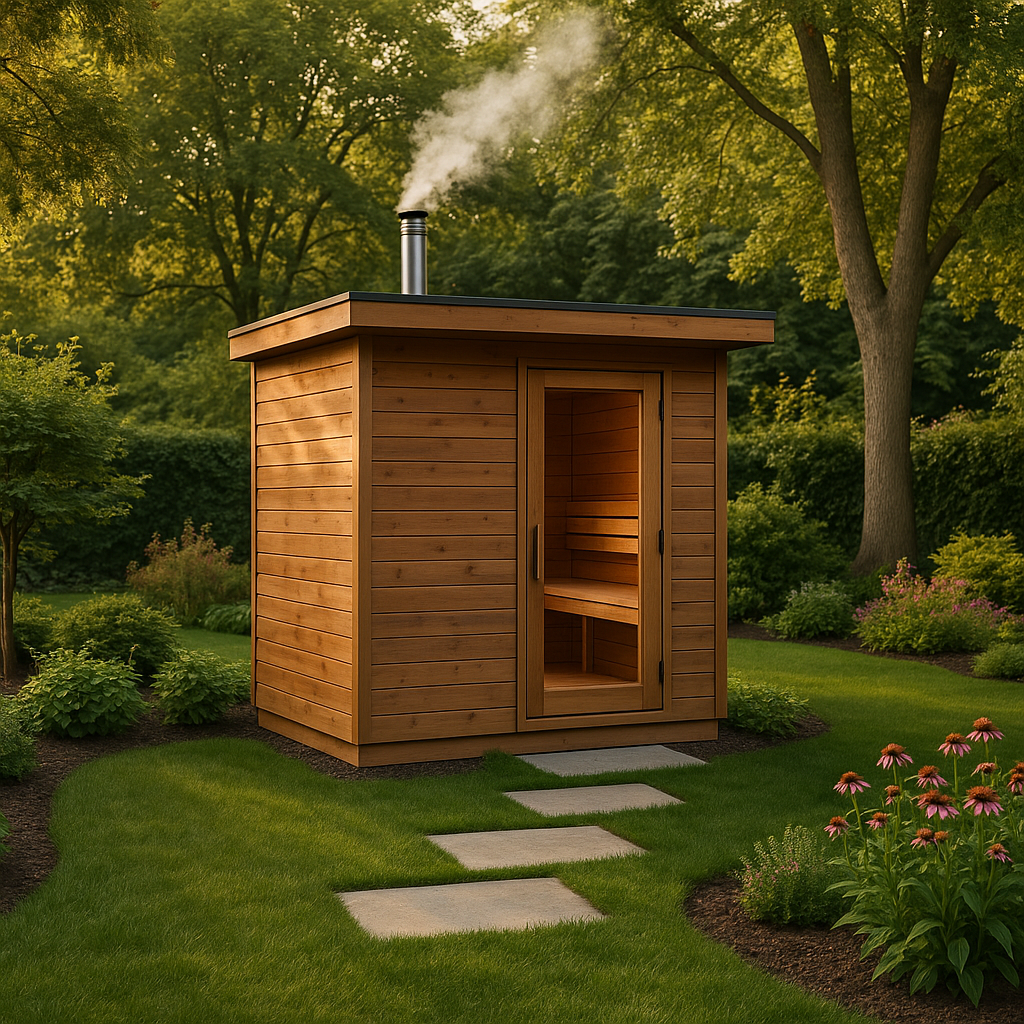
In this article, we will discuss in detail the pros and cons of stationary saunas, compare them with mobile alternatives, advise you on how to properly plan and install a sauna in your backyard, look at heating and insulation solutions for year-round comfort, and share information on the health and well-being benefits of saunas. You will also find practical tips and answers to common questions to help you make the best decision when choosing a sauna.
Fixed and mobile saunas: key differences and selection criteria
Before investing in a sauna in your own backyard, it is important to consider all the options and choose the solution that best suits your needs. Stationary and mobile saunas have their own advantages and disadvantages that need to be assessed.
Advantages of stationary saunas
- Durability - sturdy structures, usually made of logs or quality timber, last for decades
- Better thermal insulation - proper insulation ensures energy efficiency and comfort in all seasons
- Increased flexibility in design and installation - the possibility to adapt the sauna to individual needs and home style
- extra space - a lounge area, changing room or even a bedroom
- better integration into the landscape - becomes an organic part of the yard
- Higher value for real estate - as a fixed structure, it increases the value of the overall property
Disadvantages of stationary saunas
- Higher initial costs - quality materials and construction require higher investment
- Building permits required - as a fixed structure, official permits are often required
- Longer installation times - from design to construction can take weeks or even months
- cannot be moved - if you decide to change your home, the sauna remains as an integral part of the property
Benefits of mobile saunas
- lower initial investment - simpler design saves money
- quick installation - many models are delivered already assembled and ready for use
- Simplified permitting process - in some cases no building permits are required
- mobility - the sauna can be moved to another location or taken with you when you move
Disadvantages of mobile saunas
- shorter life - simpler design means shorter life
- lower thermal insulation - lower energy efficiency, especially in the cold season
- Smaller spaces - limited scope for additional rooms
- less customisation - limited scope for adaptation to individual needs
In the long term, a fixed sauna is often a more economically attractive investment. Although the initial costs are higher, the longevity, energy efficiency and added value to the property compensate for the initial investment. In addition, a fixed sauna offers the opportunity to create a unique space that reflects personal style and needs.
Domas Petraitis, an expert in local construction, says: „Most of my clients who choose a permanent sauna appreciate not only its functionality, but also the way it becomes an integral part of the home, where family and friends gather not only for the pleasure of the sauna, but also to socialise.”
If you are considering a permanent sauna, it is worth consulting a professional who can help you assess the characteristics of your plot, your needs and your budget to find the best solution.
Planning and installing a fixed sauna in the backyard
Setting up a permanent sauna starts with careful planning. This stage is particularly important as it determines the functionality, comfort and durability of the future sauna.
Site selection
Choosing the right location is one of the most important steps in setting up a sauna. When choosing a location, it is worth considering the following aspects:
- distance from the house - convenient when the sauna is not too far away, especially in the cold season
- privacy - the sauna should be protected from prying eyes
- Landscape features - it is worth making use of the natural elements of the site (trees, slopes, water bodies)
- Wind direction - it is important to assess the direction of the prevailing winds for the efficiency of the flue
- access to communications - electricity, water and sewage systems
- fire safety requirements - appropriate distance from other structures
Legal aspects and permits
Like other buildings, a permanent sauna requires certain permits. In Lithuania, the requirements for building permits vary depending on the municipality, the size and type of sauna. The following documents are usually required:
- land ownership documents
- a plot plan showing the location of the building
- the design of the building (depending on size, a simplified design may be sufficient)
- building permit or notice of commencement of construction (for smaller buildings)
Before starting construction, it is essential to consult your local municipality's building department for specific requirements in your municipality.
Choice of materials
The materials used in the construction of a sauna must not only be aesthetically pleasing, but also adapted to the specific conditions of the sauna - high temperature and humidity: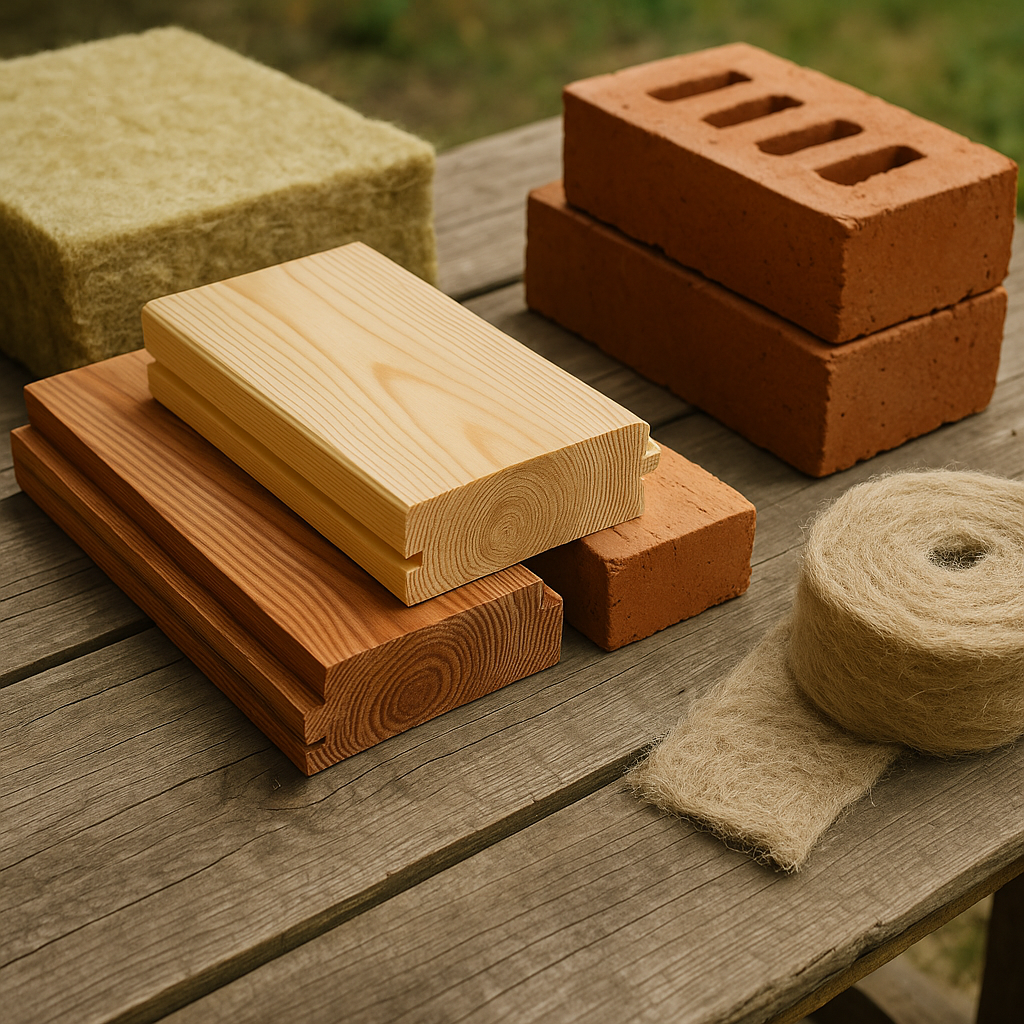
- Walls - wood (pine, spruce, cedar) is most commonly used, less commonly masonry with additional insulation
- Interior finishes - aspen, lime or alder are best for sauna use, as they are less hot and do not emit resin
- flooring - traditionally wooden floors with appropriate waterproofing or special ceramic tiles
- Roof - must be well insulated and moisture-proof
- insulation materials - mineral wool, polystyrene foam or eco-friendly alternatives (hemp, flax insulation)
Choosing a sauna heater
The stove is the heart of the sauna, so the choice of stove is very important. The main types of stoves:
- wood-burning stove - a traditional choice for an authentic sauna experience and a pleasant smoky aroma
- Electric sauna heater - user-friendly, low-maintenance, but loses some of the charm of a traditional sauna
- gas stove - a compromise between wood-burning and electric, in terms of convenience and authenticity
- Combination stoves - combine the advantages of different types of stoves
When choosing a stove, it is important to take into account the size of the sauna, thermal needs, energy sources and personal preferences.
Layout of sauna spaces
An optimal sauna structure usually includes:
- anteroom (changing room) - a space for changing and relaxing between treatments
- steam room - the main area of the sauna with a stove and loungers
- lounge area - a space to relax after sauna treatments
- shower or washbasin - indoors or outdoors
- terrace - extra space for relaxing in the warm season
Budget planning
The cost of a stationary sauna in Lithuania can range from several thousand to tens of thousands of euros, depending on size, quality of materials and equipment. Main cost categories:
- design and permits - 300-1000 EUR
- foundations - 1000-2000 EUR
- construction and exterior finishing - EUR 2000-5000 and more
- interior finishing - 1000-3000 EUR
- Furnace and chimney - EUR 500-2500
- engineering systems (electricity, water supply, sewage) - 1000-2500 EUR
- furniture and equipment - EUR 500-2000
These figures are indicative and may vary depending on the specific features of the project, the cost of materials and the type of stove chosen.
A well-designed and equipped permanent sauna will not only be a source of wellness, but also a cosy space where you can spend quality time with your family and friends throughout the year.
Comfort all year round: heating, insulation and seasonal use
One of the biggest advantages of a fixed sauna is that it can be used all year round. However, for a sauna to be comfortable at any time of the year, heating, insulation and ventilation must be properly addressed.
Efficient thermal insulation
High-quality thermal insulation is essential for sauna comfort in the cold season and energy savings. The main aspects of insulation are:
- Wall insulation - mineral wool, polystyrene foam or eco-friendly materials (recommended thickness 100-150 mm)
- Roof insulation - a thicker layer of insulation (150-200 mm), as most heat is lost through the roof
- floor insulation - polystyrene foam or extruded polystyrene under the concrete slab
- windows and doors - double or triple glazing, quality doors with thermal insulation layer
- vapour barrier - protects the insulation layer from moisture
- thermal bridging - it is important to avoid thermal bridging in structures
Optimising the heating system
An efficient sauna heater system not only ensures a comfortable temperature, but also economical energy use: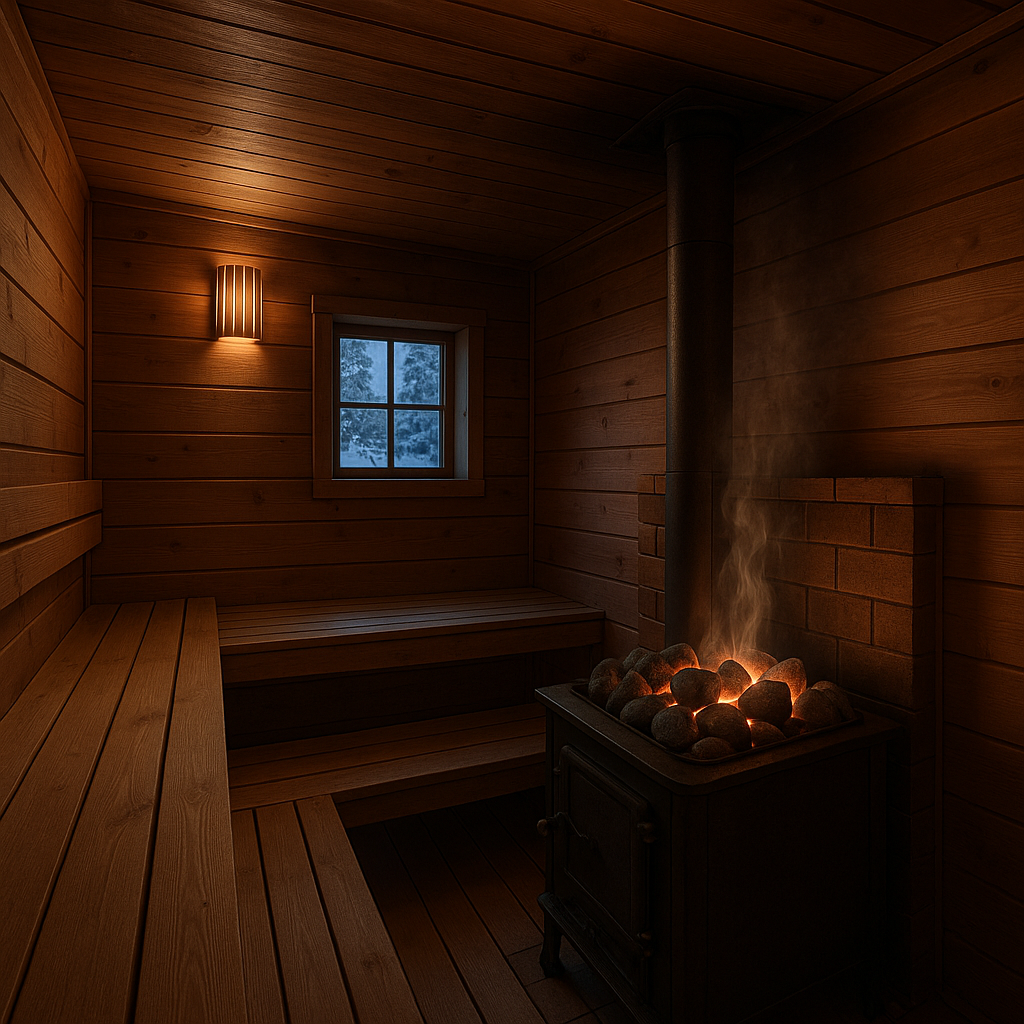
- selecting the power of the stove - the stove must be selected according to the size of the sauna (usually 1 kW per 1 m³ volume)
- storage elements - stones or other materials that collect heat and release it evenly
- Heat distribution system - ensures even heat distribution throughout the room
- additional heating in the vestibule - electric or other type of heating in the changing room
- underfloor heating - especially important in the cold season for comfort
Ventilation solutions
Proper ventilation not only ensures comfort but also safety in the sauna:
- natural ventilation - a traditional solution with air inlets and outlets
- mechanical ventilation - for more efficient air circulation
- heat recovery systems - to save energy while conserving heat
- Seasonal adjustments - the ability to change the ventilation intensity depending on the season
Seasonal maintenance and use
Different seasons require different sauna maintenance:
Winter season
- Longer heating up time - need to plan ahead
- protecting water systems from freezing - heating pipes or draining water without using it
- snow clearance from roofs and accesses - ensures safety of structures and ease of access
- additional heating in the vestibule - for comfort when changing
Summer season
- natural cooling - optimising ventilation on hot days
- outdoor shower - extra comfort in the warm season
- terrace and outdoor seating area - extends the possibilities of using the sauna
- Insect protection - screens on windows and doors
Spring and autumn seasons
- humidity control - more frequent ventilation during wet periods
- Insulation inspection - preventing potential heat loss before winter
- Cleaning the stove and chimney - ensuring safety before heavy use in winter
Smart technologies and energy savings
Modern technology can help optimise sauna use and energy consumption:
- remote control systems - possibility to switch on the stove before arrival
- Temperature control systems - automated climate maintenance
- Heat recovery systems - recovers the heat from the exhaust air
- Solar energy solutions - for supplementary electricity or water heating
- LED lighting - a cost-effective and atmospheric solution
Investing in quality insulation and efficient heating systems may seem like a big investment, but in the long run it not only ensures year-round comfort, but also saves on energy costs. A stationary sauna, properly installed and maintained, will become a decoration for your yard and an oasis of comfort in all seasons.
Health and well-being benefits of a fixed sauna
Having a permanent sauna in your backyard is not only an element of comfort and luxury, but also an investment in your health and well-being. Regular use of a sauna has a positive effect on both physical and psychological health, and having access to a sauna at any time further enhances this effect.
Benefits of physical health
Sauna treatments have a positive effect on various body systems:
- cardiovascular system - regular sauna use dilates blood vessels, improves blood circulation and lowers blood pressure
- respiratory system - the moist hot air helps cleanse the airways and relieves sinus inflammation
- Musculoskeletal system - the heat relaxes muscles, reducing joint pain and stiffness
- immune system - a moderate dose of heat stress strengthens the body's resistance
- skin - intense sweating helps to cleanse the pores of the skin, improving its condition and appearance
- detoxification - toxins and heavy metals are removed through sweat
Psychological and emotional benefits
Sauna treatments are equally important for psychological and emotional health:
- Stress reduction - exposure to heat and a relaxing atmosphere reduces stress hormones
- better sleep quality - after a sauna, it's easier to fall asleep and sleep is deeper
- Mood enhancement - the heat stimulates the release of endorphins, which improve mood
- a meditative experience - the sauna creates an environment that encourages concentration and reflection
- social ties - the sauna tradition is often associated with socialising, friends and family gatherings
Traditions and cultural aspects of bathing
Sauna culture in Lithuania has a deep tradition, which makes the practice even more valuable:
- traditional herbs and medicinal plants - birch and oak vases, various infusions and decoctions
- rituals and ceremonies - traditional bathing rituals passed down from generation to generation
- mindfulness practices - the sauna promotes awareness, focusing on the present moment
- connection to nature - the sauna symbolises harmony between man and nature
Benefits of regular sauna use
Having a stationary sauna in your backyard offers the following additional benefits:
- Convenience - no need to plan trips to public baths or spas
- privacy - enjoy the sauna without intruders
- Hygiene - personal hygiene conditions
- Flexibility - you can use the sauna whenever you want
- cost-effective - cheaper in the long run than regular use of paid saunas
- a family tradition - an opportunity to foster sauna culture in the family and to pass on the knowledge to children
The fixed sauna in the courtyard becomes not only a place of relaxation, but also a wellness centre where you can regularly improve your health, well-being and traditions.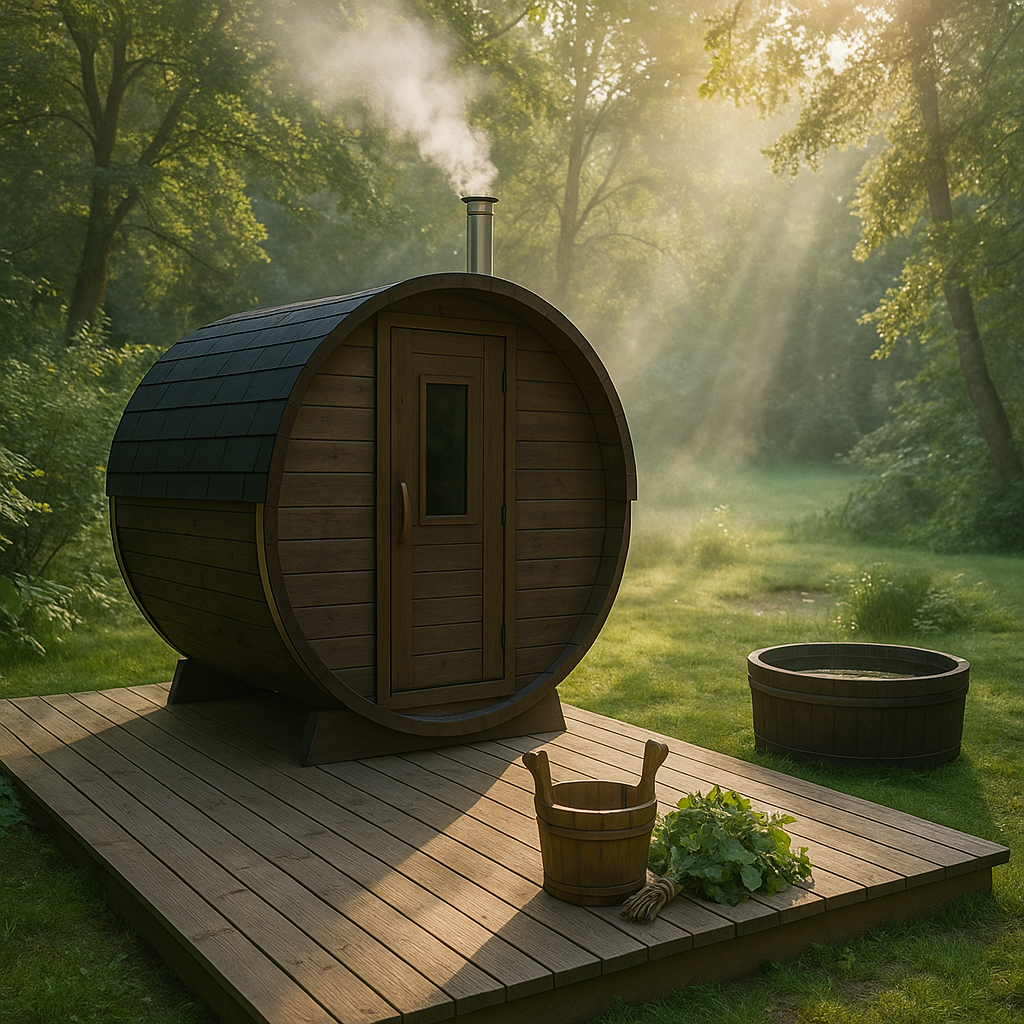
The sauna can be used at any time of the year, allowing you to adapt the treatments to the season - in summer, enjoy contrasting treatments with a cold shower or bath, and in winter, warm up in the cosy sauna after a day in the cold.
Regular sauna users' experience shows that their own sauna ritual is becoming a valuable part of their routine, helping to maintain physical and emotional balance in the pace of modern life.
Summary
A fixed sauna in the backyard is more than just a building or a place to spend your free time. It is an investment in a comfortable lifestyle, health and well-being that provides benefits throughout the year. Although the initial investment in a fixed sauna is higher than in a mobile sauna, its durability, comfort and added value to the property will pay off in the long term.
The stationary sauna offers a unique opportunity to enjoy sauna treatments at any time of the year - on a hot summer's day you can take a contrasting shower, in autumn you can warm up in a cosy sauna watching the leaves fall, in winter you can enjoy the contrast of warmth with the winter's rush, and in spring, you can renew yourself together with nature. When properly designed and equipped, it becomes not only an oasis of wellness, but also an aesthetic backyard decoration that reflects your style and values.
When deciding on a permanent sauna, it is worth taking a long-term perspective - it is not just a building, but also a part of a lifestyle that will provide enjoyment and benefits for many years. Careful planning, quality installation and regular maintenance will ensure that your sauna will last a long and reliable life, providing comfort and well-being for you and your family.
A permanent sauna in the backyard is an investment in quality of life, the preservation of traditions and everyday comfort, allowing you to enjoy the pleasures of a sauna at any time of the year, without leaving home.
Frequently asked questions
What are the main advantages of a fixed sauna compared to a mobile sauna?
Stationary saunas offer greater durability, design flexibility and better insulation for year-round use, while mobile saunas offer mobility and lower initial costs.
Does a stationary sauna in Lithuania require a building permit?
Yes, in most cases, permanent saunas require building permits as they are considered permanent structures. However, the specific requirements may vary depending on the location and size of the sauna, so it is always worth checking with your local municipality.
How much does it cost to install a fixed sauna in the yard?
Prices can vary considerably depending on size, materials, heating system and additional features - from €3,000 for a simpler option to €10,000 or more for a more luxurious solution.
Which heating system is best suited for a stationary outdoor sauna in Lithuania?
Wood stoves are popular for their authenticity and efficiency, but electric stoves are easier to maintain and more environmentally friendly, so it depends on individual needs and preferences.
How can I ensure the comfort of my sauna during winter?
Invest in quality insulation, double or triple glazing and a reliable heating system. Regular maintenance and proper air-tightness will keep your sauna warm and cosy all year round.